

Semiconductor: Protecting Dry-Etch Chamber Parts Against Aggressive Plasma
Strategies for protecting dry etch chamber components against plasma damage to ensure longevity, cleanliness, and process consistency.
Why Dry Etch Chamber Protection is Critical

Dry-etch processing is fundamental to modern semiconductor fabrication. By harnessing halogen-based plasmas, most often fluorine or chlorine chemistries, these processes achieve precise, anisotropic etching that defines the microscopic features of today’s advanced integrated circuits.
However, the same plasma that enables fine patterning also subjects chamber hardware to relentless attack. Plasma-facing parts such as chamber shields, focus rings, and electrostatic chucks (ESCs) are exposed to:
- Chemical erosion from reactive radicals forming volatile byproducts.
- Physical sputtering from high-energy ion bombardment.
- Thermal cycling that causes expansion, contraction, and micro-cracking over repeated runs.
Over time, these effects cause measurable wear, surface roughening, and particle generation. Any contamination reaching the wafer can compromise yield, while dimensional changes in critical parts can alter plasma behavior and cause process drift. In high-volume fabs, this translates directly to increased maintenance, unplanned downtime, and reduced throughput. To meet these challenges, fabs rely on advanced protective coatings. Two materials, Yttria (#1341), engineered for maximum plasma resistance, and High-Purity Spherical Alumina, a cost-efficient solution for secondary components, have emerged as the most effective options.
Understanding the Demands of Aggressive Plasma Environments
The plasma environment inside a dry-etch chamber is both chemically and physically intense:
- Chemical attack steadily consumes exposed surfaces by reacting with halogen species, forming volatile metal halides or oxides.
- Physical sputtering physically dislodges atoms, accelerating erosion, particularly in high-energy ion regions.
- Thermal stress from rapid temperature fluctuations can compromise coating integrity and open micro-pathways for chemical ingress.
These degradation mechanisms are most severe in direct line-of-sight to the plasma discharge, where ion energy and radical concentration are highest. Once erosion starts, increased surface roughness traps more reactive species, accelerating material loss and generating loose particles.
How Protective Coatings Preserve Chamber Integrity
Protective ceramic coatings provide a physical and chemical barrier that slows the degradation process, extending the usable life of critical components. When correctly selected and applied, they:
- Extend service life, reducing the frequency of part replacement and downtime.
- Lower contamination risk, maintaining smoother surfaces that shed fewer particles.
- Preserve process stability, keeping part dimensions and electrical properties within specification.
However, no single material is optimal for every chamber location. The most effective strategy is to match coating material properties to the severity and type of exposure in each zone.
Key Materials for Effective Dry Etch Chamber Protection
Different parts of a dry-etch chamber face different stress. Saint-Gobain offers two high-performance ceramic powders that work together to provide complete chamber protection: Yttria (#1341) for maximum plasma resistance and High-Purity Spherical Alumina for cost-effective durability in lower-exposure areas.
i. Yttria (#1341): Engineered for Maximum Plasma Resistance
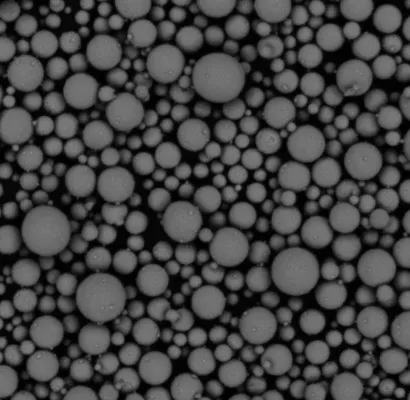
Yttrium oxide (Y₂O₃) is the gold standard for halogen plasma resistance. Saint-Gobain’s #1341 High Purity Yttria thermal spray powder is specifically engineered for semiconductor plasma-facing applications where ultra-cleanliness and resistance to wear are non-negotiable.
Key technical attributes:
- The combination of a densified spherical morphology and an ultra-narrow particle size distribution (10–30 µm) results in coatings with porosity levels below 1%, producing highly dense, gas-tight protection against aggressive chemistries.
- Purity above 99.995% Y₂O₃, minimizes trace contamination and particle release during wafer processing.
- Stable fluorinated surface layer formation (YF₃/YOF) under plasma, further enhances erosion resistance and particle control.
Applications: Upper and lower chamber shields, focus ring edges, and other high-exposure components where contamination risk is critical.
Learn how high-purity Yttria (#1341) powders deliver maximum plasma resistance in semiconductor dry-etch chambers.
ii. High-Purity Spherical Alumina: Reliable, Cost-Efficient Coverage
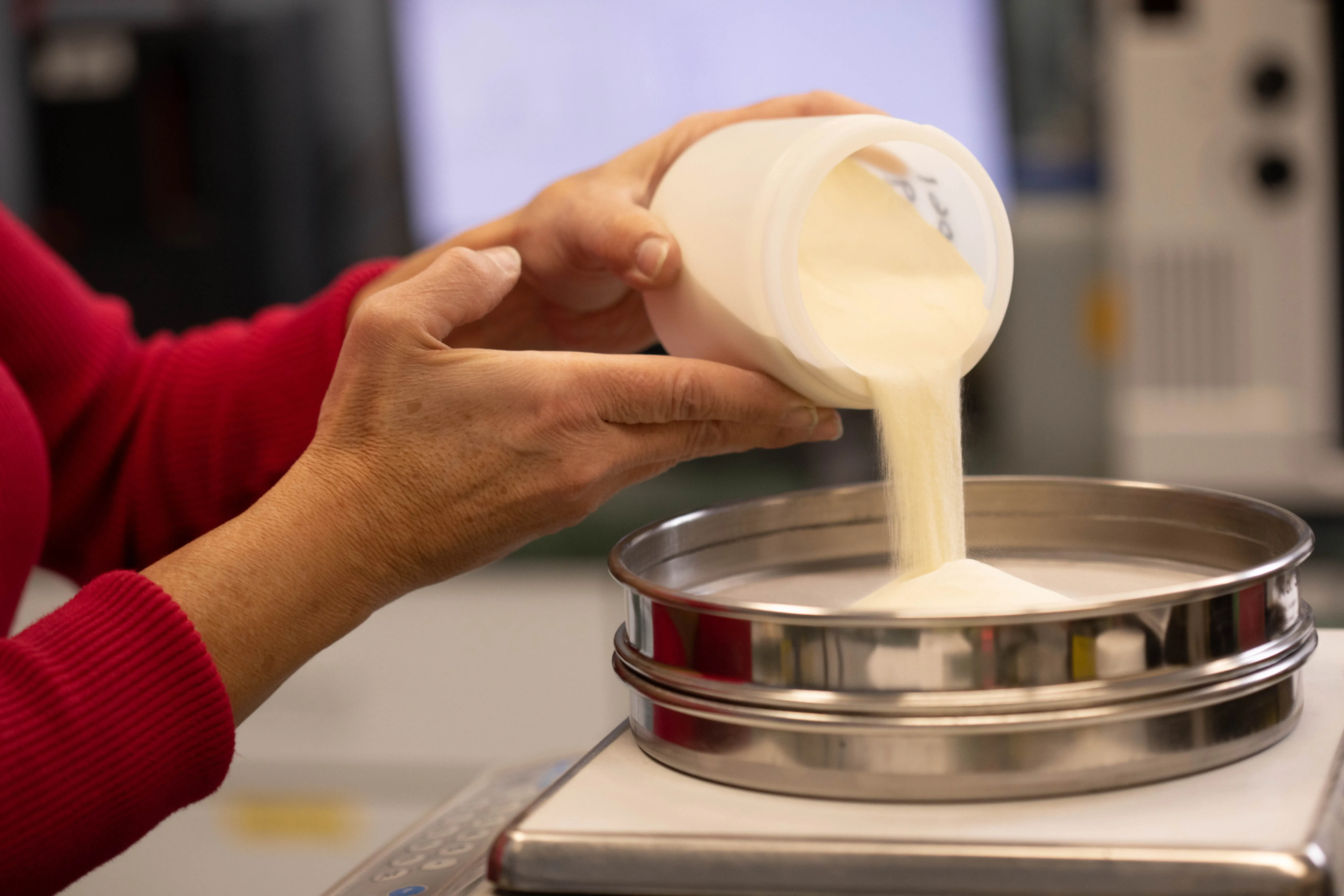
Alumina (Al₂O₃) has a long track record as a semiconductor coating material due to its balance of performance and cost. Saint-Gobain’s High-Purity Spherical Alumina thermal spray powder is optimized for components operating in moderate plasma exposure zones.
Key technical attributes:
- Spherical particle morphology improves flowability and deposition consistency.
- It produces dense, hard coatings, offering good erosion tolerance and mechanical durability.
- Maintains stable dielectric performance, ideal for electrically insulating parts such as liners.
- Thermal stability withstands repeated heating and cooling cycles without loss of integrity.
Applications: Chamber liners, baffles, and peripheral fixtures where plasma intensity is lower, but durability and insulation remain essential.
Discover how High-Purity Spherical Alumina provides reliable, cost-effective protection for semiconductor chamber components.
Performance in Use: Y₂O₃ vs. Alumina
Testing in fab environments and controlled studies consistently shows how these materials behave under different plasma conditions:
- Erosion Resistance: Y₂O₃’s combination of ultra-high purity, sub-1% porosity, and stable surface fluorination gives it a slower wear rate in halogen-rich plasmas. Alumina wears faster under direct plasma bombardment but is resilient enough for moderate exposure zones.
- Particle Control: Y₂O₃ coatings retain surface smoothness for longer, reducing particle shedding and contamination risk. Alumina surfaces remain clean and stable when not subjected to intense plasma flux.
- Dielectric Integrity: Both provide strong insulation. Y₂O₃ maintains dielectric strength for longer in aggressive chemistries, while alumina performs consistently in less chemically harsh environments.
These results confirm that both materials are essential parts of a balanced chamber protection strategy, each excelling under the conditions for which it is best suited.
Discover practical solutions to protect your dry-etch plasma chambers.
Key Sales Argument: Why Offer Both Materials
By combining #1341 Yttria and High-Purity Spherical Alumina, Saint-Gobain enables fabs to:
- Optimize performance where it matters most, using Y₂O₃ in zones where failure would have the greatest impact on uptime, yield, and contamination control.
- Control costs without compromising reliability, applying alumina in less exposed areas that still require strong dielectric and wear properties.
- Reduce maintenance interventions, leveraging Y₂O₃’s extended service life in high-exposure areas to lengthen maintenance cycles, while alumina keeps peripheral parts stable.
- Support long-term process stability, tailoring coating material to match each component’s exposure profile ensures chamber conditions remain consistent over time.
The densified spherical morphology, tightly controlled particle size range, sub-1% porosity, and ultra-high purity of #1341 Y₂O₃ make it uniquely capable of surviving aggressive plasma chemistries. Meanwhile, the thermal stability, dielectric reliability, and coating density of High-Purity Spherical Alumina ensure cost-effective protection for secondary zones. Together, they provide a comprehensive, fab-wide coating strategy that balances durability, cleanliness, and economics.
In addition to our standard high-purity powders, we also offer co-development opportunities for customers with specific process challenges. For programs with significant technical or production impact, our R&D and applications teams can collaborate directly with fabs and OEMs to tailor powder formulations to exact process needs. This ensures that material performance is optimized not only for plasma resistance, but also for each customer’s unique chamber design and operational priorities.
Practical Placement Strategy
- #1341 Y₂O₃: Upper/lower chamber shields, focus ring edges, direct plasma-facing hardware.
- High-Purity Spherical Alumina: Liners, baffles, peripheral parts with moderate plasma exposure.
This placement maximizes performance and cost efficiency, ensuring each material is used where it delivers the greatest benefit. Dry etch chamber protection is about more than extending part life, it directly impacts yield, process stability, and fab productivity. By deploying Y₂O₃ and alumina strategically, manufacturers can ensure critical components remain reliable over extended runs while keeping overall maintenance costs under control.
Choosing the right coating material is a long-term investment in process reliability and we’re here to help you get it right.
Have a specific requirement or need guidance on material selection?
Our expertise can help you assess your plasma exposure profile and recommend the optimal combination of Y₂O₃ and alumina coatings for maximum performance and cost efficiency.